


Designation
Old Cathedral of Coimbra
Current occupation
Catholic Church
Ownership
Diocese of Coimbra
Art-historical characterisation
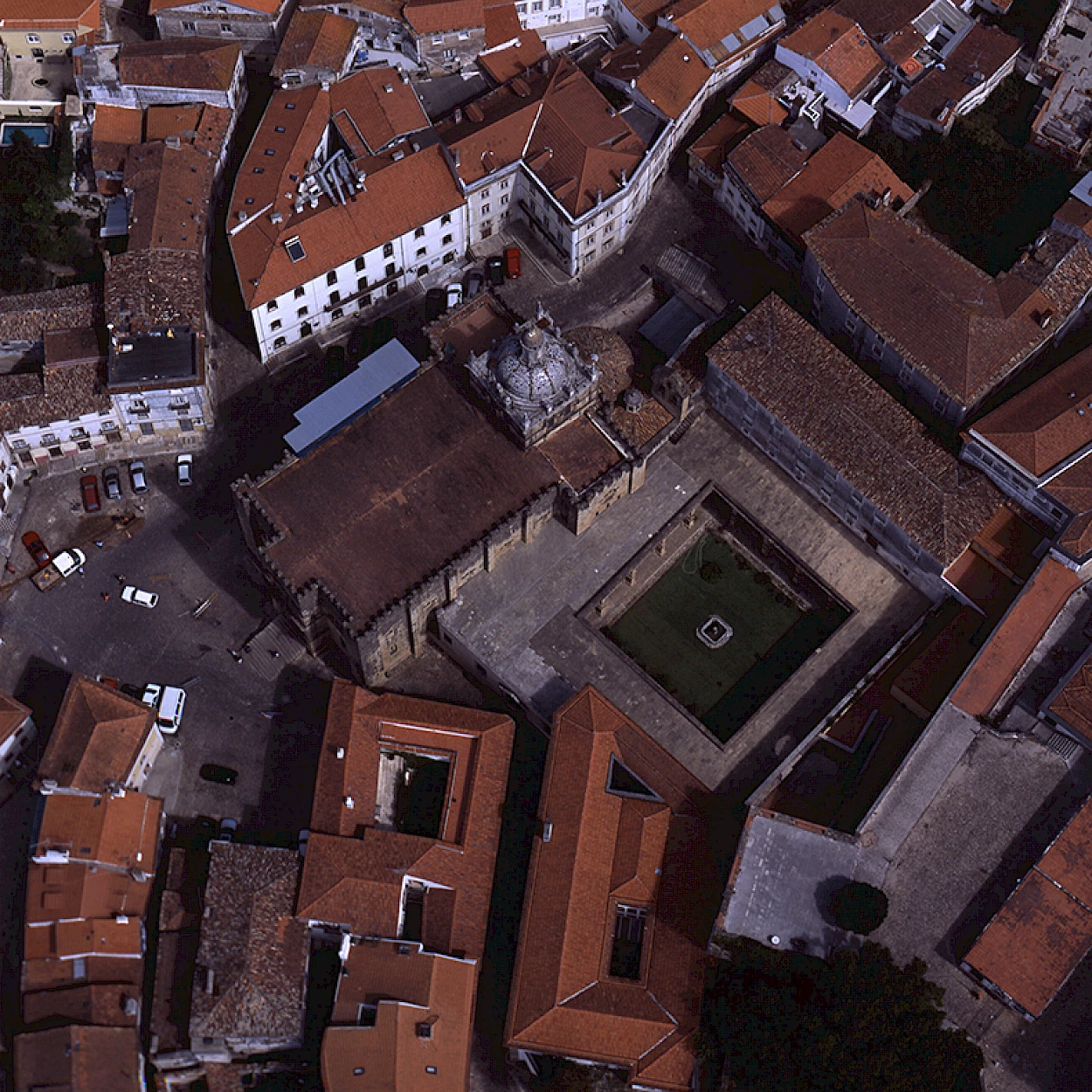
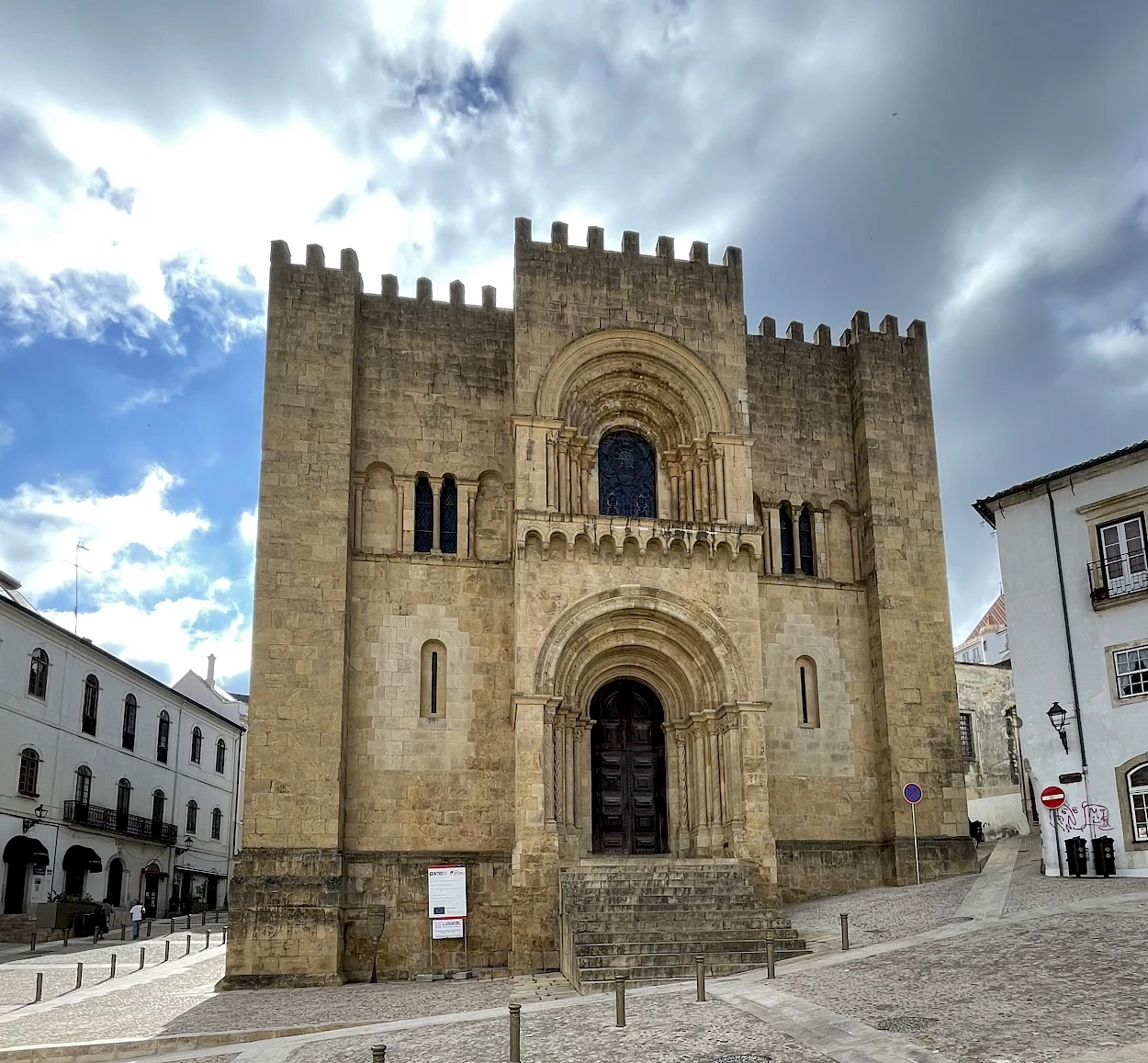
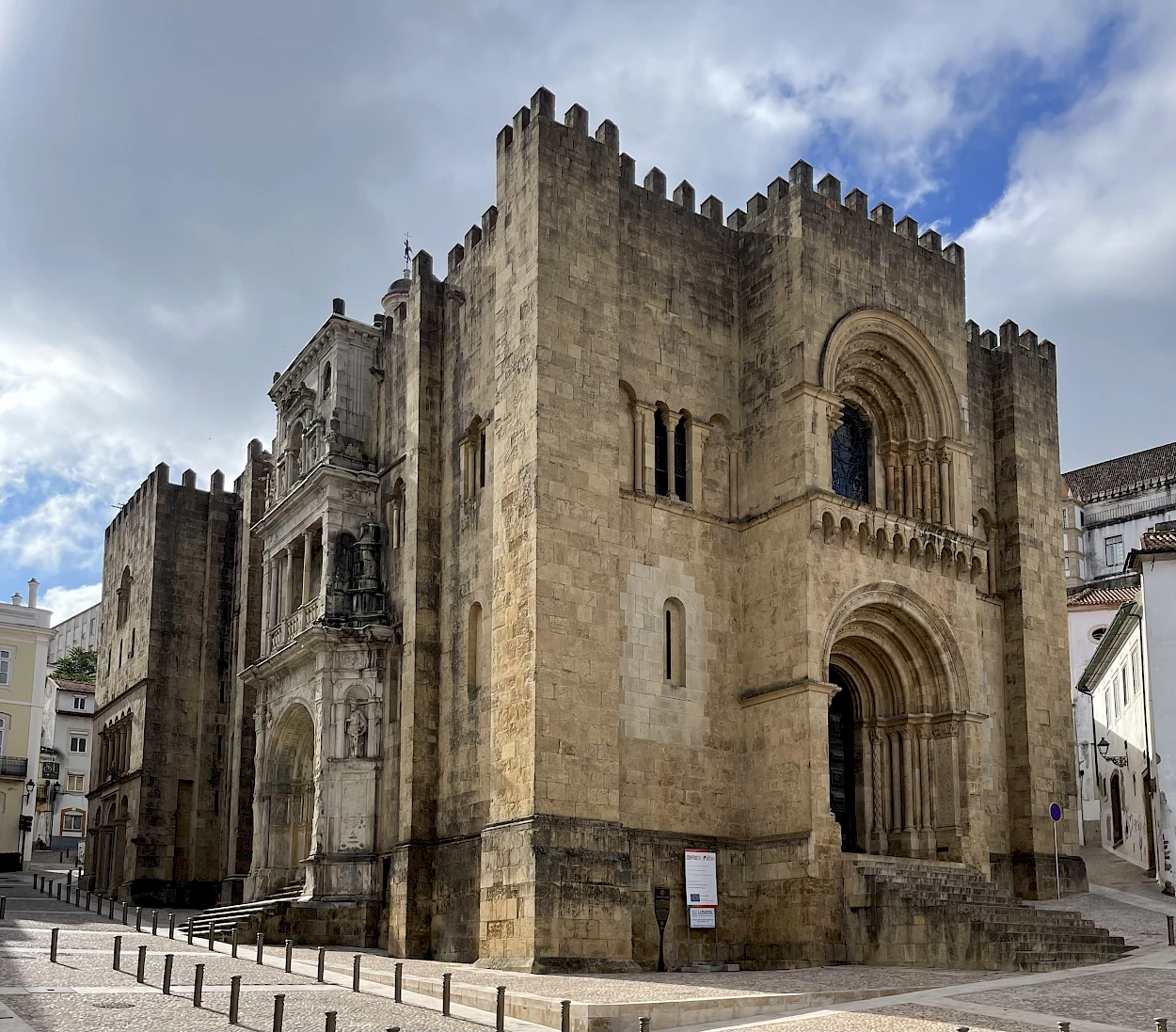
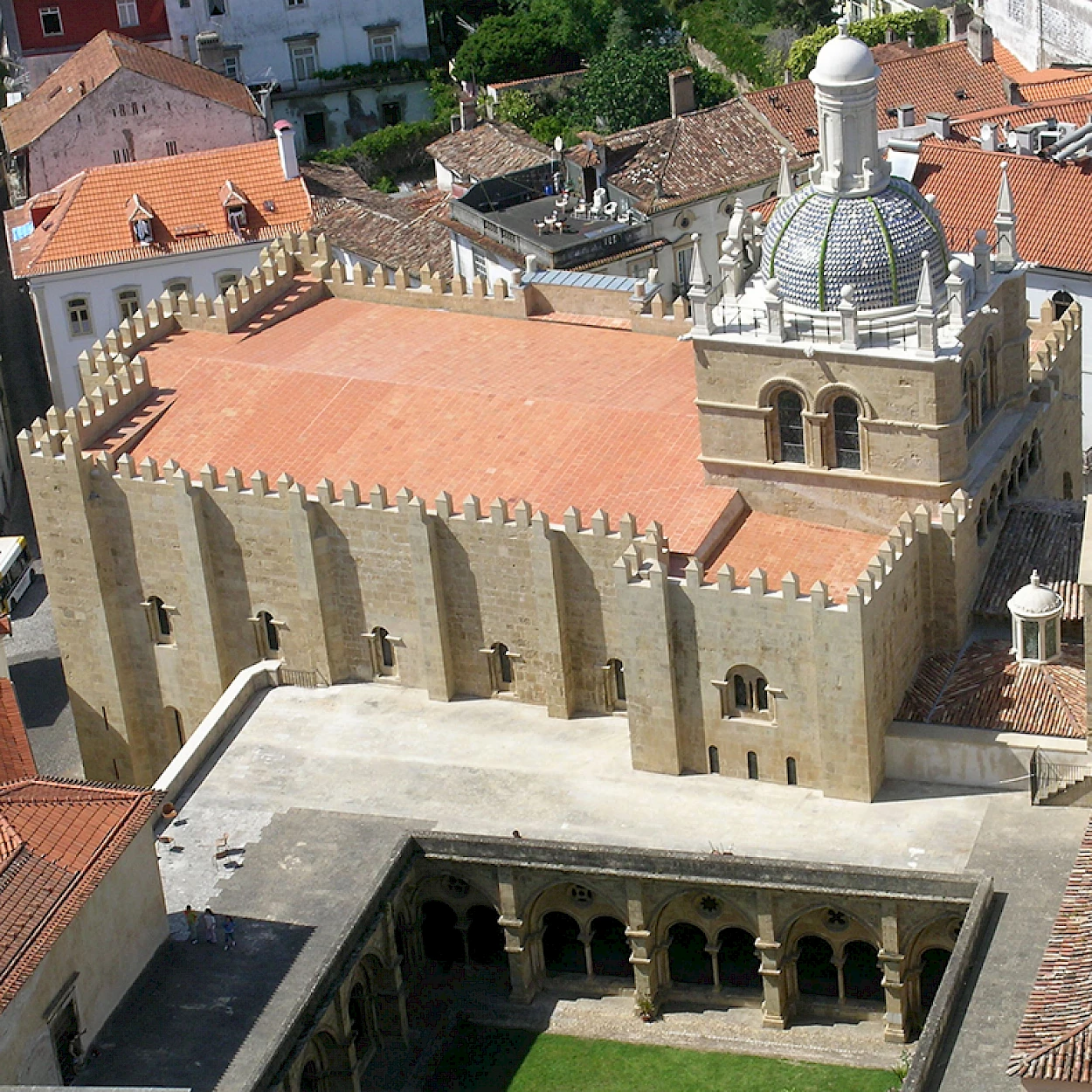
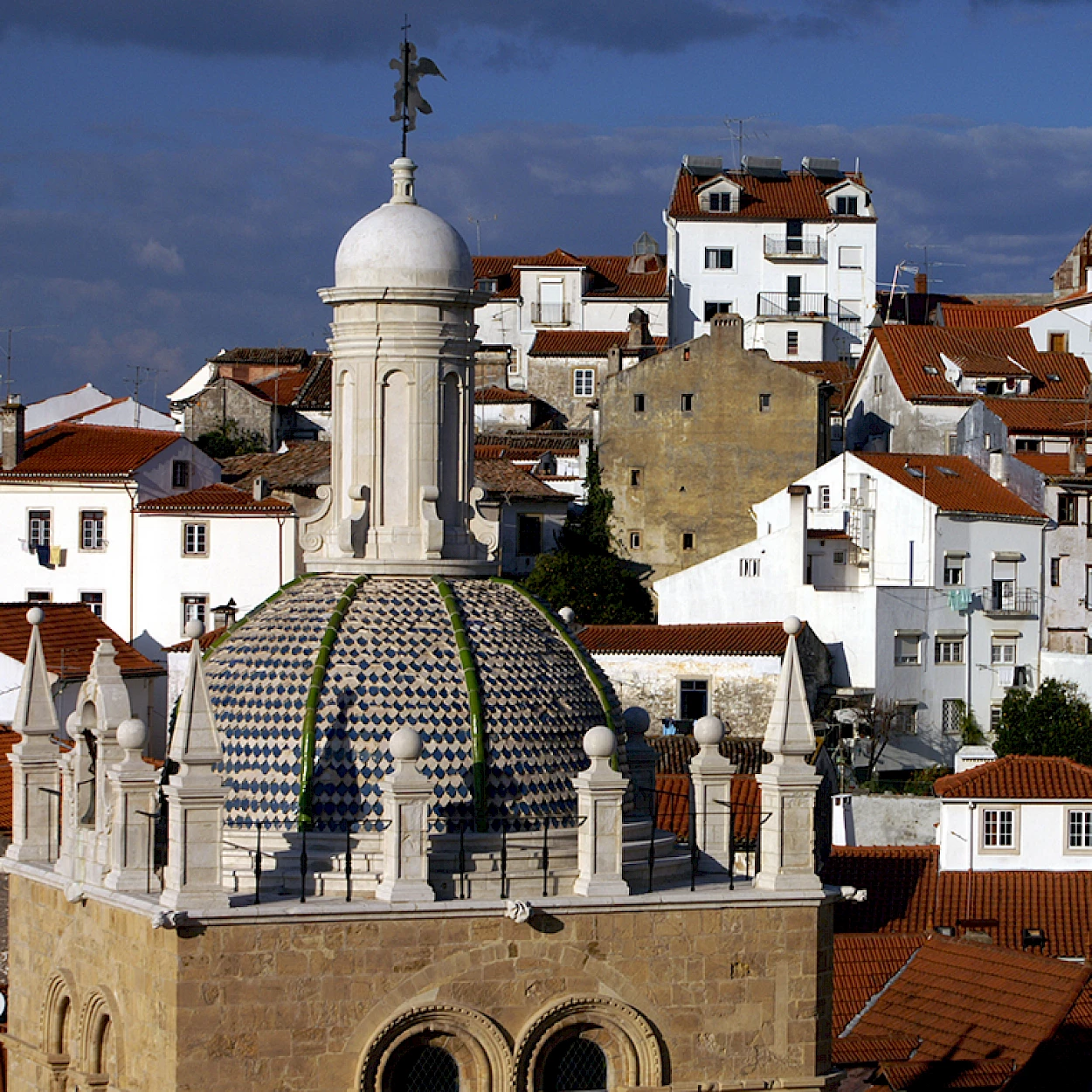
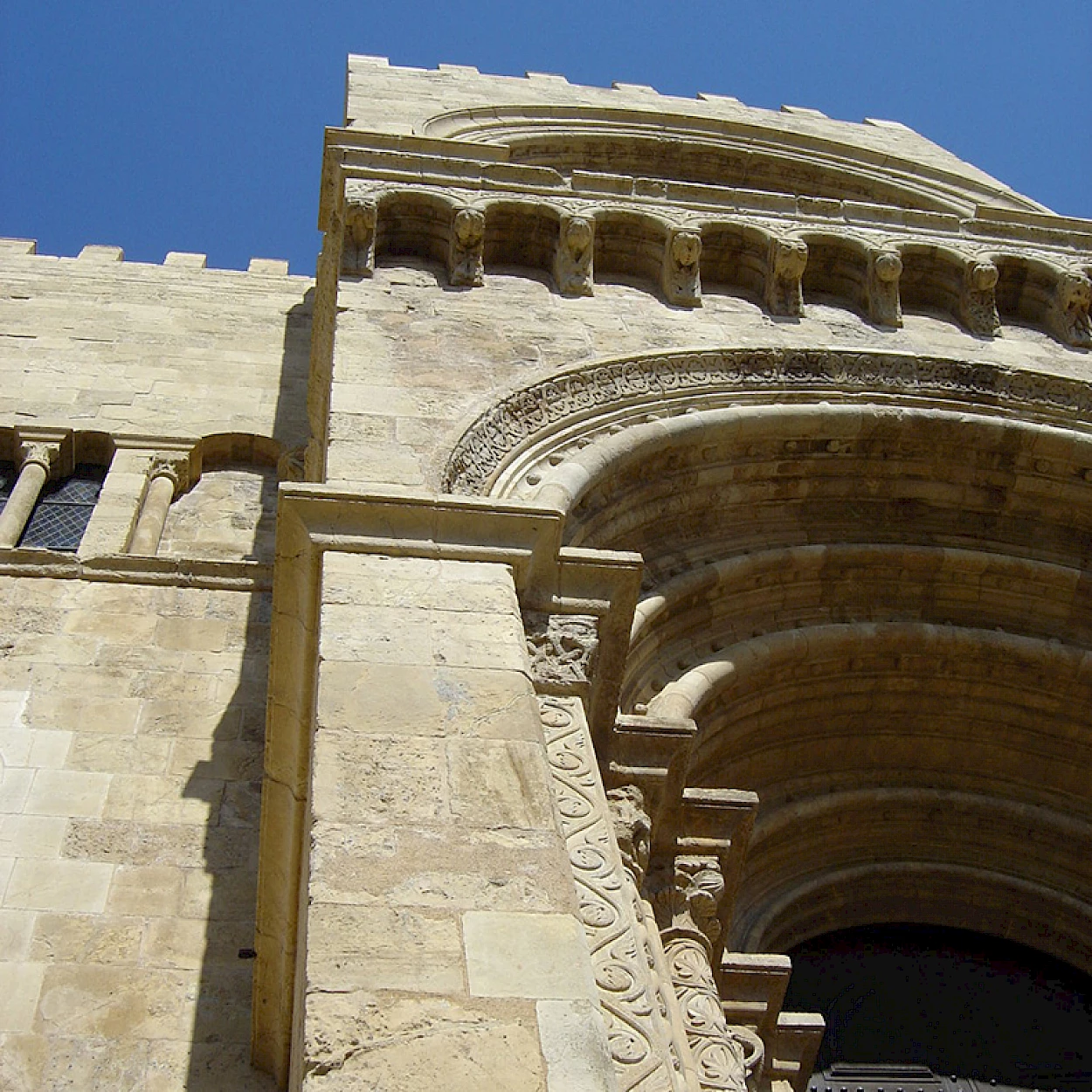
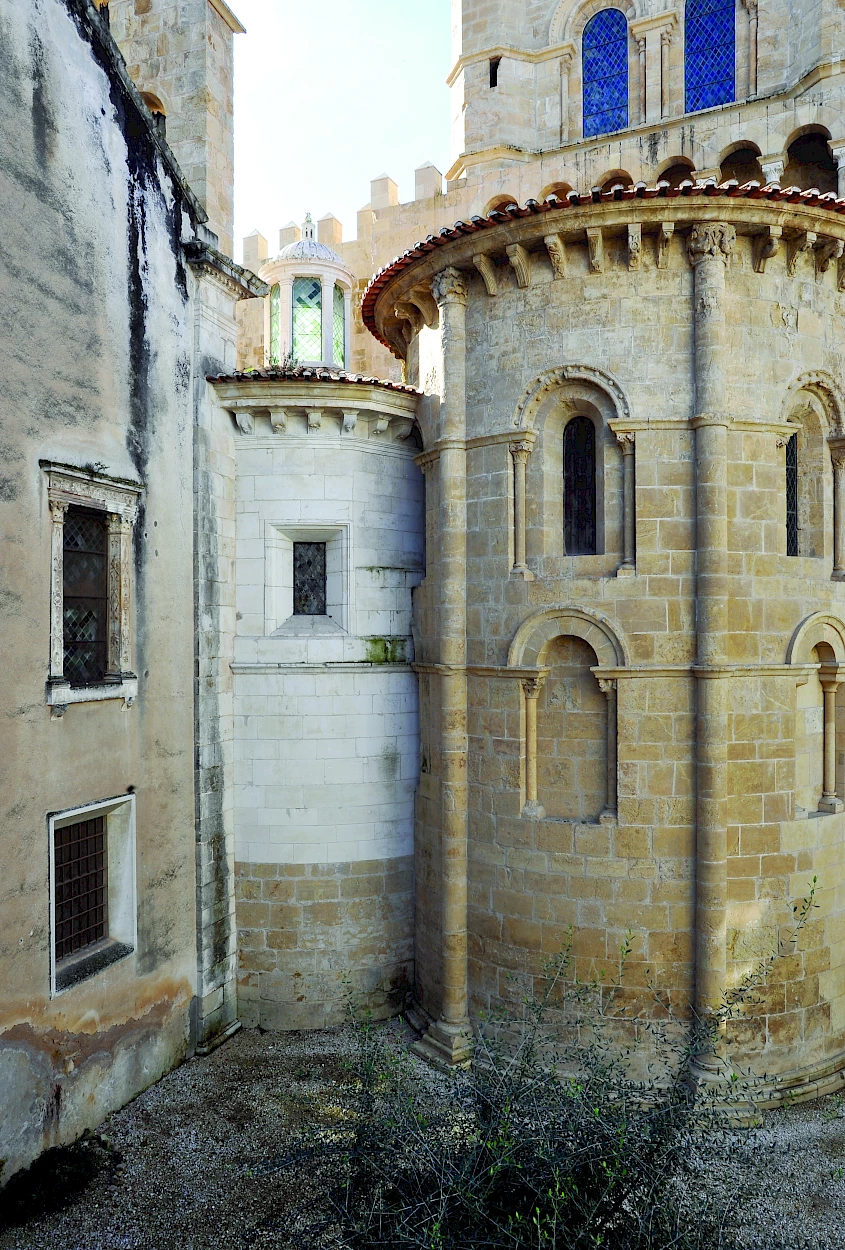
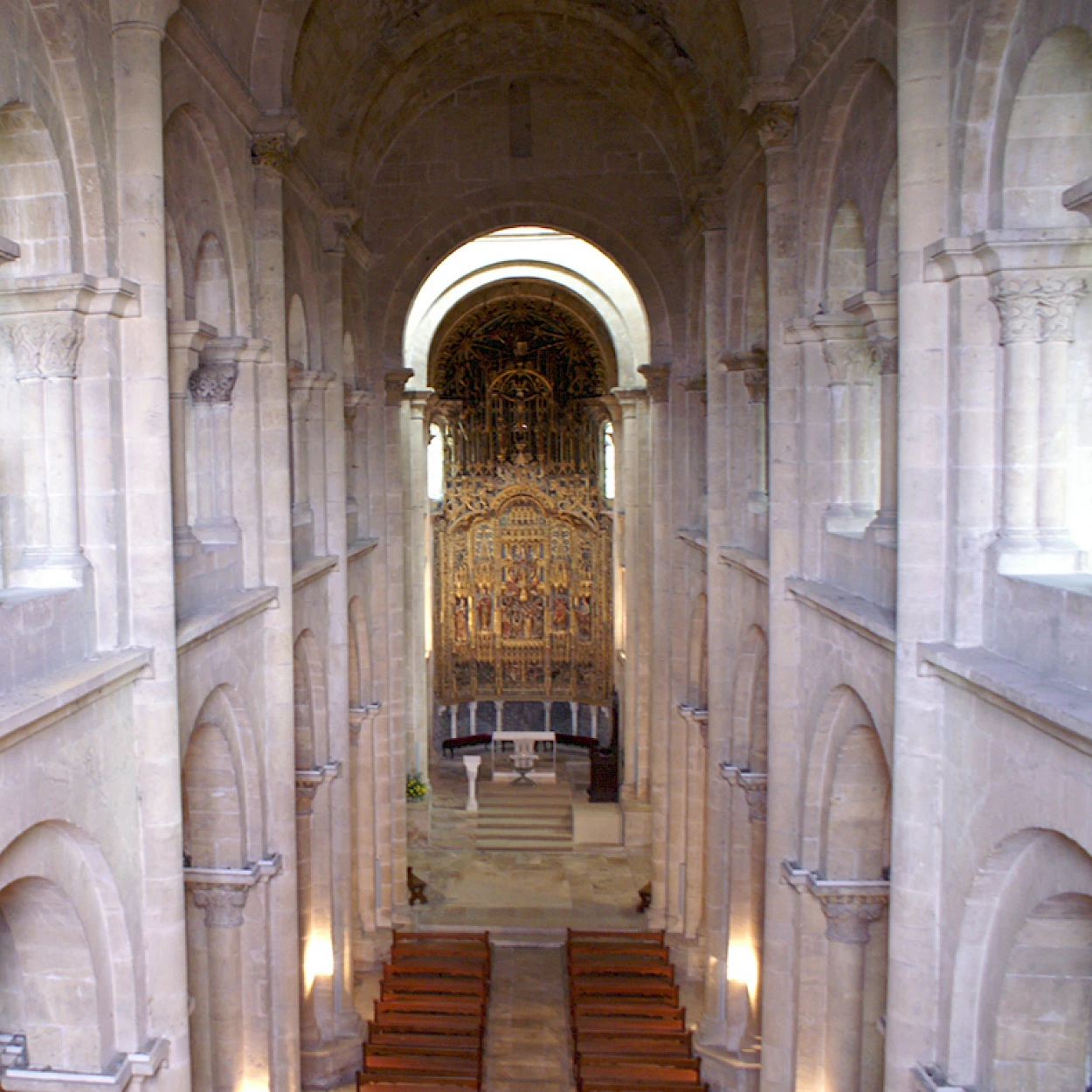
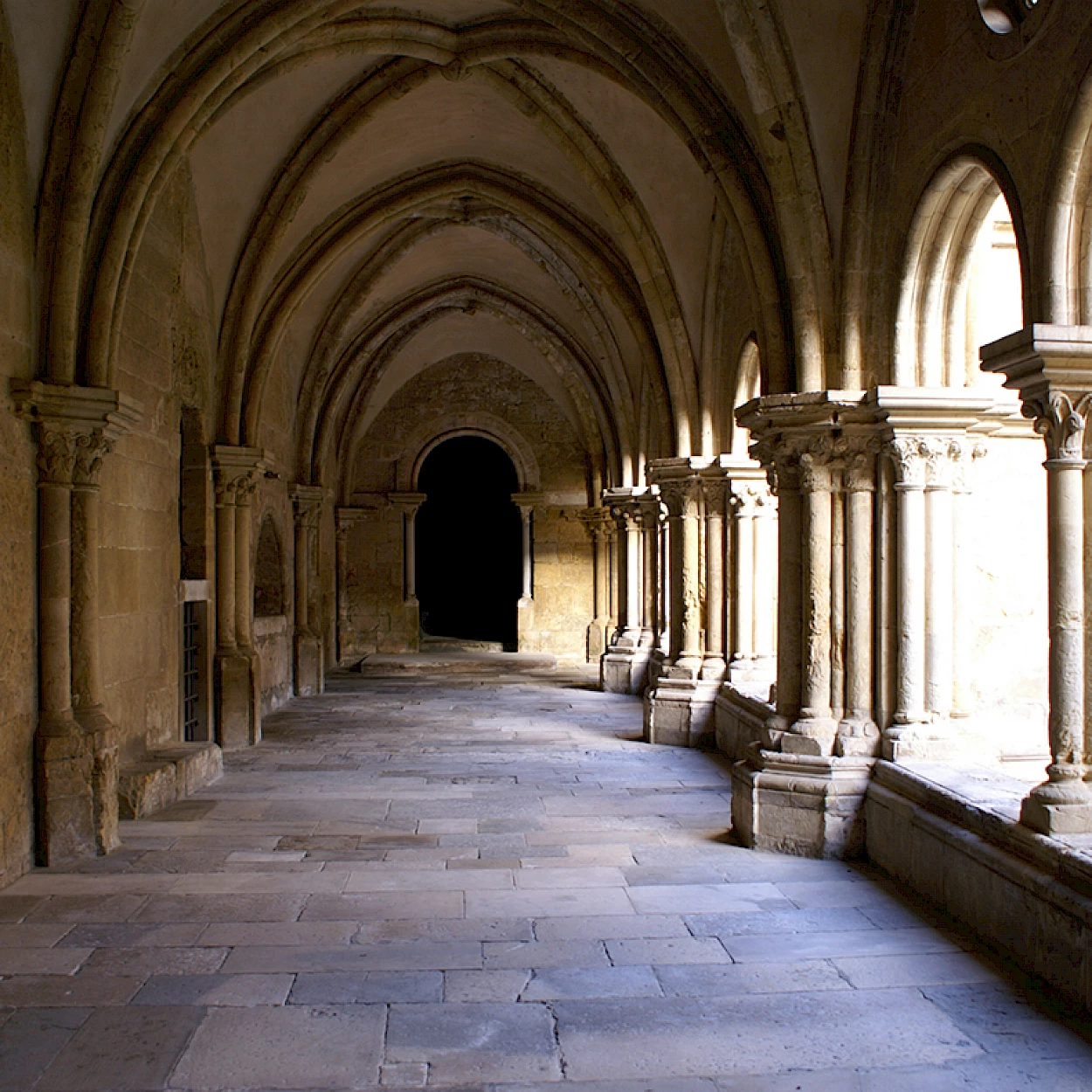
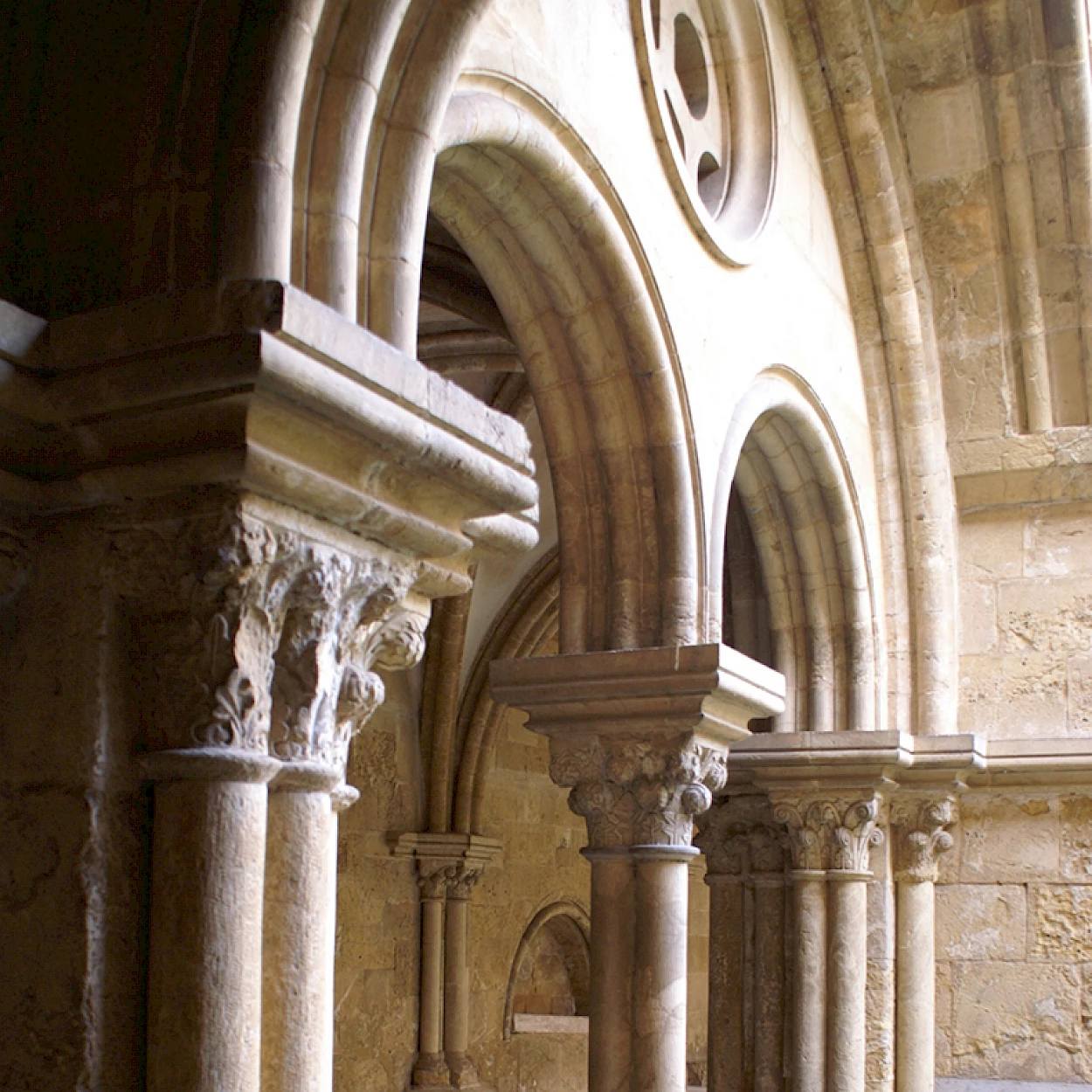
The construction of the Old Cathedral began in the second half of the 12th century, under the guidance of Master Roberto who, it seems, was directing the work on the Lisbon Cathedral at the same time. It was promoted by Bishop Miguel Salomão and the monarch himself, Afonso Henriques, thus contributing to the aggrandisement of Coimbra, then the ‘capital’ of the new kingdom. The Romanesque church, built in yellow limestone, is located halfway up the hill, where the city's mosque probably stood during the Islamic occupation of the city. Compact and crenellated, it has three naves, a projecting transept and a tripartite chevet. The one-storey cloister to the south of the church was built at the beginning of the 13th century in the Gothic style. At the end of the 15th century, by order of Bishop Jorge de Almeida, a great patron of the cathedral, the flamboyant Gothic altarpiece in the main chapel was built in gilded and polychromed wood by the Flemish sculptors Olivier de Gand and Jean d'Ypres.
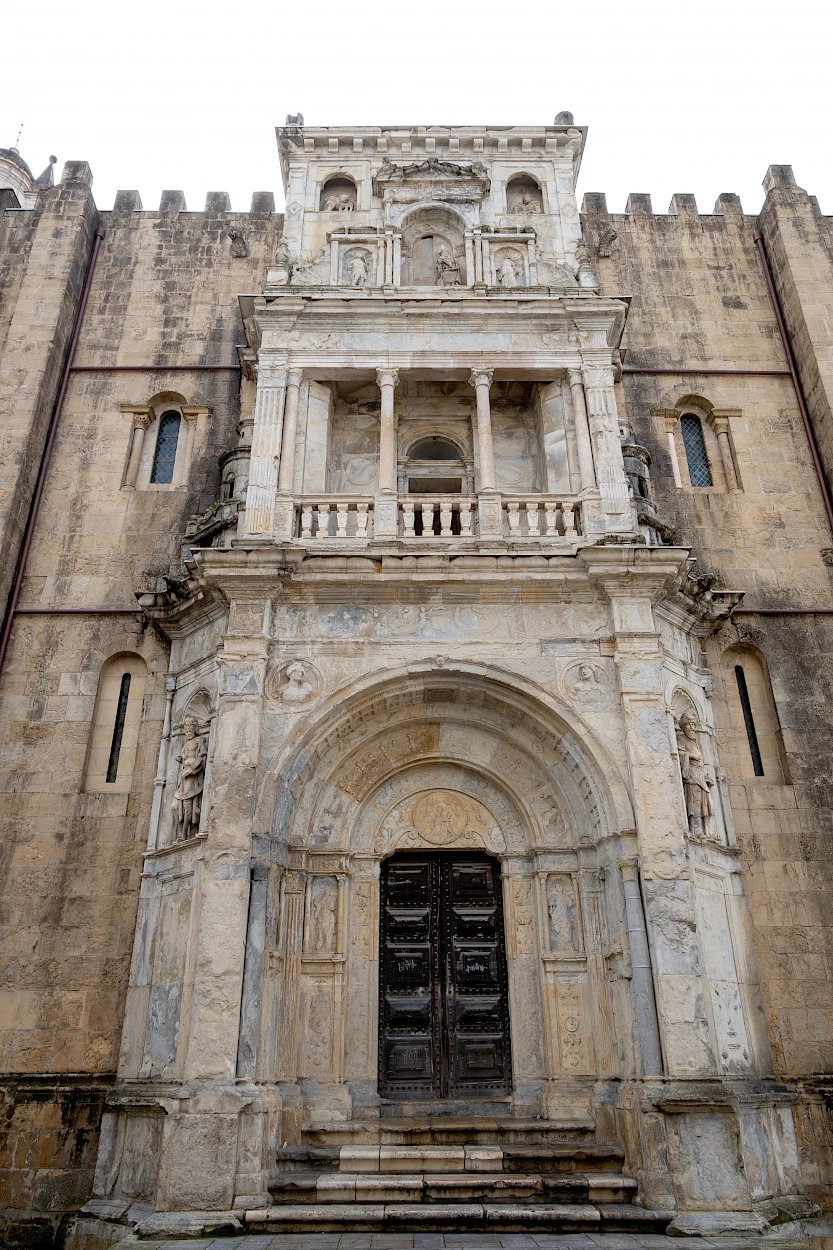
It is also to this bishop that we owe the cladding of the interior with 16th century Sevillian tiles, covering the pillars and walls of the naves and today confined to a few openings and arches; as well as one of the most important interventions in the building: the execution of the Porta Especiosa, already Renaissance in character, whose authorship is attributed to the architect João de Ruão and the sculptor Nicolau de Chanterenne. Overlapping the old side door, it is built in white limestone in a sequence of three overlapping architectural registers, especially the loggia and the finial, inspired by the Roman triumphal arches.
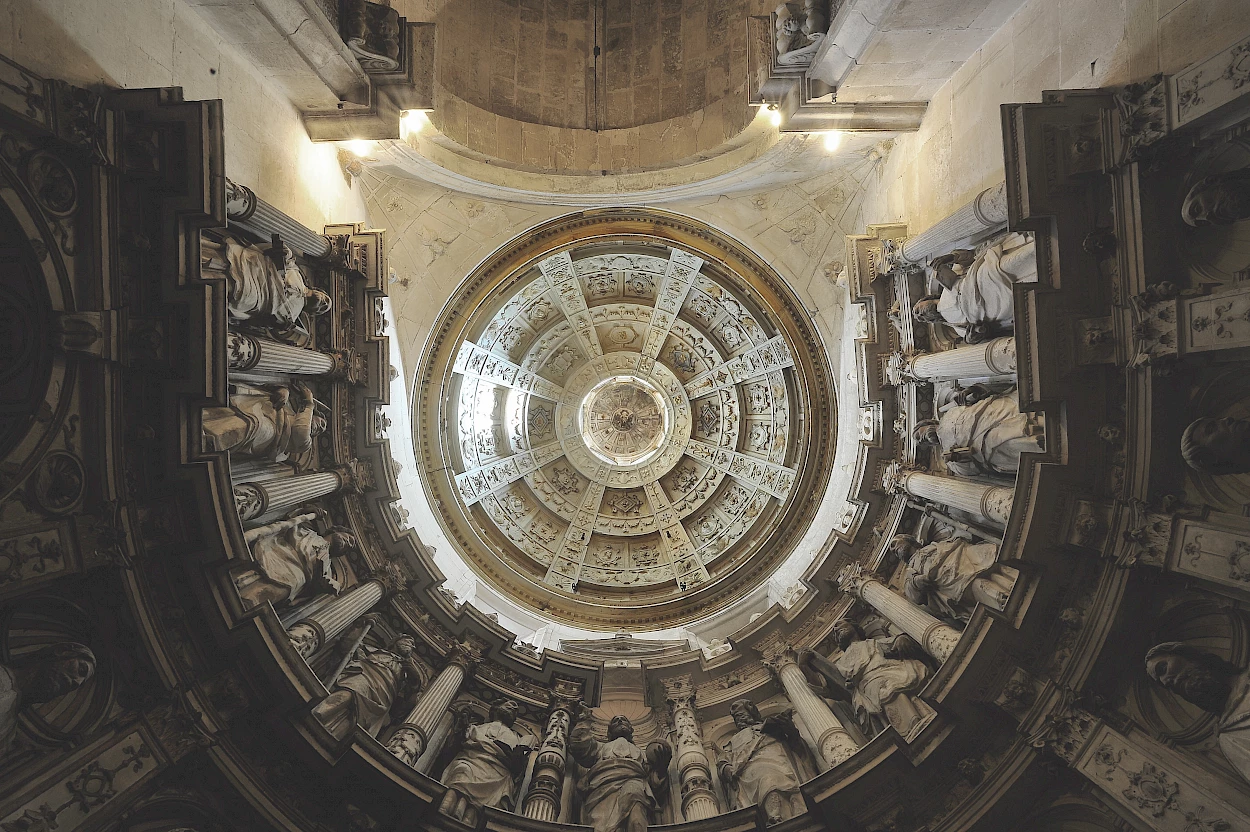
Inside the church, the transept, the lantern tower over the cross and the medieval tombs stand out.
In the last third of the 18th century, after the expulsion of the Jesuits, the episcopal seat was transferred to the then vacant church of the Colégio de Jesus, in the city's Upper Town, now known as the Sé Nova de Coimbra.
For more information, see the Architectural Heritage Information System factsheet.